GST 40% Slab List Updated
Government Updates GST Rates, Releases Full List of Items in 40% Sin and Luxury Bracket
The Goods and Services Tax (GST) Council has made one of the biggest changes to India’s tax system since GST was first introduced in 2017. On Wednesday, Union Finance Minister Nirmala Sitharaman announced that starting September 22 — the first day of Navratri — GST rates will be simplified and reduced for many goods and services. The decision was taken during the 56th GST Council meeting.
The Council has decided to cut the existing four tax slabs down to just two, while also introducing a special high tax for luxury and sin goods. This move is being welcomed as a major reform that will bring relief to common people, make businesses more efficient, and improve compliance across the country. Sitharaman said the change will also help boost India’s economy. “I think it will have a very positive impact on GDP,” she said.
From four slabs to a simpler two-slab structure
Until now, GST was charged under four main brackets: 5%, 12%, 18%, and 28%. This system often created confusion for both businesses and consumers, especially for products that did not clearly fit into one category. Now, the Council has decided to simplify the structure into just two main slabs — 5% and 18%.
This means that the 12% slab has been completely removed, and items that were under it will now move into the 5% or 18% categories. Similarly, items that were previously in the 28% slab but not considered luxury or sin goods will be adjusted into the new structure. Officials explained that this will make the GST system more transparent, reduce disputes, and encourage better compliance from businesses.
For ordinary consumers, the reform means that many essential and everyday items will become cheaper, as they will now fall into the 5% category. This includes several basic goods and services that households use regularly. On the other hand, most other items that are not luxury or sin goods will now come under the 18% bracket.
The government believes this rationalisation will not only simplify tax collection but also make it easier for small and medium businesses to work with the system, as they no longer need to worry about multiple categories and complex rate calculations.
Special 40% rate for luxury and sin goods
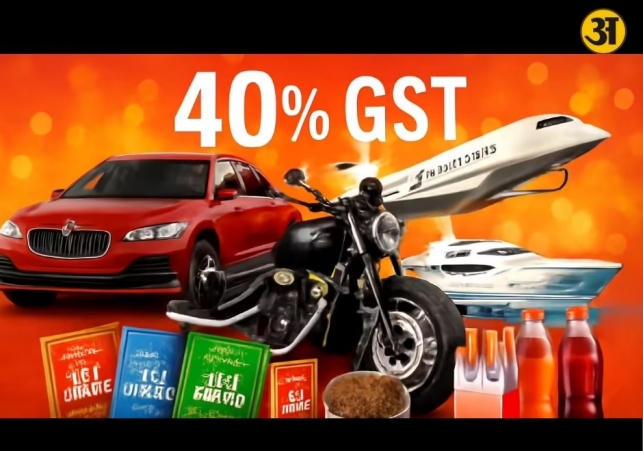
Along with simplifying the system, the GST Council has also introduced a new 40% de-merit rate. This will apply to products considered either luxury items or “sin goods.”
Sin goods are items that the government views as harmful to health, society, or the environment. They are taxed at a higher rate to discourage consumption. This includes products that are addictive or dangerous, such as tobacco.
The list of sin goods under the new 40% GST rate includes:
-
Pan masala
-
Gutka
-
Cigarettes
-
Bidi
-
Chewing tobacco
-
All tobacco products
-
Cigars, cheroots, and cigarillos of tobacco or substitutes
-
Tobacco products designed for inhalation without burning
-
Carbonated beverages
-
Caffeinated drinks
-
All types of aerated water
This new rule is especially strict for tobacco-related products. The GST will now be levied on retail prices instead of ex-factory prices, ensuring higher revenue collection and discouraging consumption further.
Luxury goods will also face the 40% rate. These include:
-
Helicopters
-
Yachts
-
Motorcycles with engines above 350 cc
-
Mid-size and large cars (vehicles with engines over 1500 cc or length above 4000 mm)
By keeping luxury and sin goods under a higher tax slab, the Council aims to ensure that the tax relief primarily benefits ordinary citizens while those buying luxury products or harmful goods contribute more in taxes.
ALSO READ: WHO says over one billion people lived with mental health conditions in 2021
ALSO READ: Trump’s remarks spark controversy among Indian-origin Brahmins in Boston
Leaders welcome GST reform
The decision has been praised by senior leaders of the government. Union Home Minister Amit Shah called the reform “historic” and said it would bring major relief to people across the country. In a post on X (formerly Twitter), he wrote, “PM Narendra Modi Ji stands for what he commits. This historic decision of GST rate cuts and process reforms will bring huge relief to the poor and middle class, while also supporting farmers, MSMEs, women and youth.”
Shah also praised the Council’s decision to make GST registration simpler, saying it would especially help small and medium enterprises (MSMEs).
Overall, the reform has been described as the biggest change in GST since July 1, 2017, when the tax was first launched. With fewer slabs, cheaper essential items, and stricter taxes on harmful products, the government hopes to make the tax system both fairer and easier for everyone.
Related News